The power of the group (and why accountability changes execution)
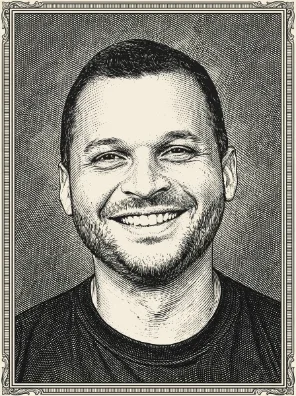
Imagine getting a message from someone who works with you: "Boss, we need to talk."
When it's outside a scheduled meeting, I freeze up. It's almost always bad news. This time the message came at the end of a week I considered practically perfect: new clients in every business, public praise at my job abroad, a draft of a seed project. And still, the "we need to talk" arrived.
The conversation was with Renato. You already know him from DevPleno. He wanted to step away from the freelance work to put more energy into his SaaS. He also works abroad. He also has businesses on the side. He'd also had a week a lot like mine. The difference is that he decided to use the spare hours in his day to push his own product, not to deliver more of my work.
It looked like a bad ending to a good week. Looking at it again, it was the start of the argument in this essay.
Two kinds of programmer (and what each one costs)
Roughly speaking, there are two ways to live the craft.
The first clocks in at eight, leaves at five or six, shuts the computer down and that's it. Does what the company asked. Period. There's no drama in that. There are consequences.
The second is restless. Finishes the eight hours and still records, sells, fixes SaaS bugs, tests offers, talks to customers. That has consequences too, just different ones.
I'm not ranking anyone morally. I'm saying the obvious thing we avoid: the path you choose charges its price. If you only deliver your working hours, accept the downside and the upside of that. If you build other sources of income, accept the downside and the upside of that too. I accept both sides of the way I do it, keeping SaaS products and several businesses going, because it changes how much my salary, whether employee or contractor, weighs on me. If something breaks there, I don't wake up in a panic.
A layoff can still get you. The difference is how painful the transition is. People who are already moving (selling, building, showing up in the market) find their footing faster. Sometimes they aren't even making real extra income yet. The movement alone already reduces the desperation. People who left the hustle for later end up running while the floor gives way.
It hurts now or it hurts later
Something I keep telling myself: you can get comfortable with discomfort.
It's going to hurt either way. You choose whether to spread the pain out now (the nights on the product, the sales that don't close, the SaaS that doesn't pay for lunch yet) or concentrate it later, when your only source disappears and you have to improvise a résumé, a network and a portfolio all at once.
Organizing your schedule doesn't mean becoming a monk. You can keep a life and still build the second and third track. The mistake is pretending the single track has no risk just because it pays well this month.
We execute more when we're close to people who are already executing. A good group isn't a cheering section: it's accountability with an example right next to you.
What Renato showed me without meaning to
The detail that made me record the video wasn't him leaving. It was the mechanism.
I execute. I share it. He sees it. He wants to execute more. It's not motivational magic from a canned quote. It's proximity. When someone in your circle is selling, publishing, landing clients, it gets harder to justify your own paralysis. The opposite is also true: surrounded by people who only complain about the market and don't touch a single line outside working hours, inertia becomes the atmosphere.
A lot of people in the market don't fail for lack of ideas. They fail for lack of accountability: someone next to them holding them to what they themselves already decided. A project that's defined and never shipped is the norm. The right group breaks that pattern without anyone becoming anyone's boss.
Renato became a tutor, helped people out, absorbed the way we work. Until the day his energy needed to go to his own SaaS and not to the freelance work. That's exactly what I want for the people around me: quality of life with more than one source of income, the peace of mind to see the job as one slice. An important one, not the only one.
Income sources without romanticizing SaaS
For me, an income portfolio includes the programming job as one of the slices. SaaS is one route. It's not the only one, and it's often not the easiest one to start with.
You can diversify with lighter paths at first: a digital product, a specialized service, a partnership, something that doesn't require you to carry product, sales and support alone from day one. Code is a means. Organizing the project and the sales is what usually gets stuck. People who think "income sources" means "writing more code at night" usually just swap one kind of tiredness for another.
Diversifying also means living with different people and different models. One slice breaks, you rebalance. That peace of mind doesn't come from motivation. It comes from real options in your pocket and constant movement in the market.
The power of the group, no frills
If I sum up the "perfect" week plus the chilling message in a single idea, it's this: execution pulls execution.
New clients and praise at work were great. The useful lesson came from Renato asking to leave so he could double down on his own game, and from realizing he only got there because he was close to someone who was already playing that way. I want the same effect in reverse: restless people close enough that I don't get comfortable either.
A weak group dilutes. A strong group holds you accountable by example. Accountability without an example turns into a sermon. An example without accountability turns into inspiration that's gone by Monday. Put both together and the pace changes.
You don't need my specific group to use this idea. You need people around you who actually execute: a business partner, a restless friend, a small community, whoever. If nobody close to you is building a second source of income, the first one will keep looking like the only one possible.
In short
The "we need to talk" message at the end of a good week didn't ruin the week. It showed the mechanism: people who execute pull in the people close to them.
There's the nine-to-five programmer and the restless one. Both are valid. Both have a bill to pay later. A layoff hurts less for people who are already moving. Pain spread out now is usually cheaper than pain concentrated later.
SaaS is one way to build an income portfolio. It's not the only one, and code alone doesn't diversify anything if sales and organization don't move. The most underrated shortcut is still the group: accountability with people who are already doing it.
Choose your path. Accept the consequences. And pay attention to who's sitting next to you, because that, more than any tutorial, decides whether you execute or just plan.
Watch the full video at O poder do grupo | SaaS | Fontes de renda como programador (in Portuguese). There I tell the story of Renato's message after the almost perfect week, the difference between the nine-to-five programmer and the restless one, and why the power of the group changes who actually ships their projects.
Don't miss the next essay.
One email a week. No spam, no hype.